Douglas
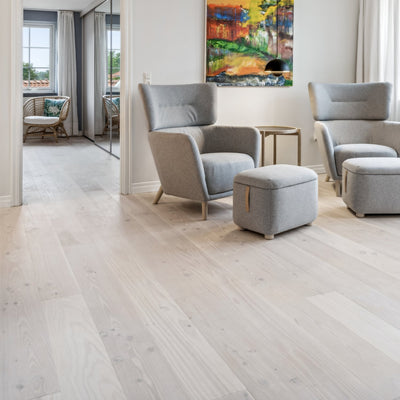
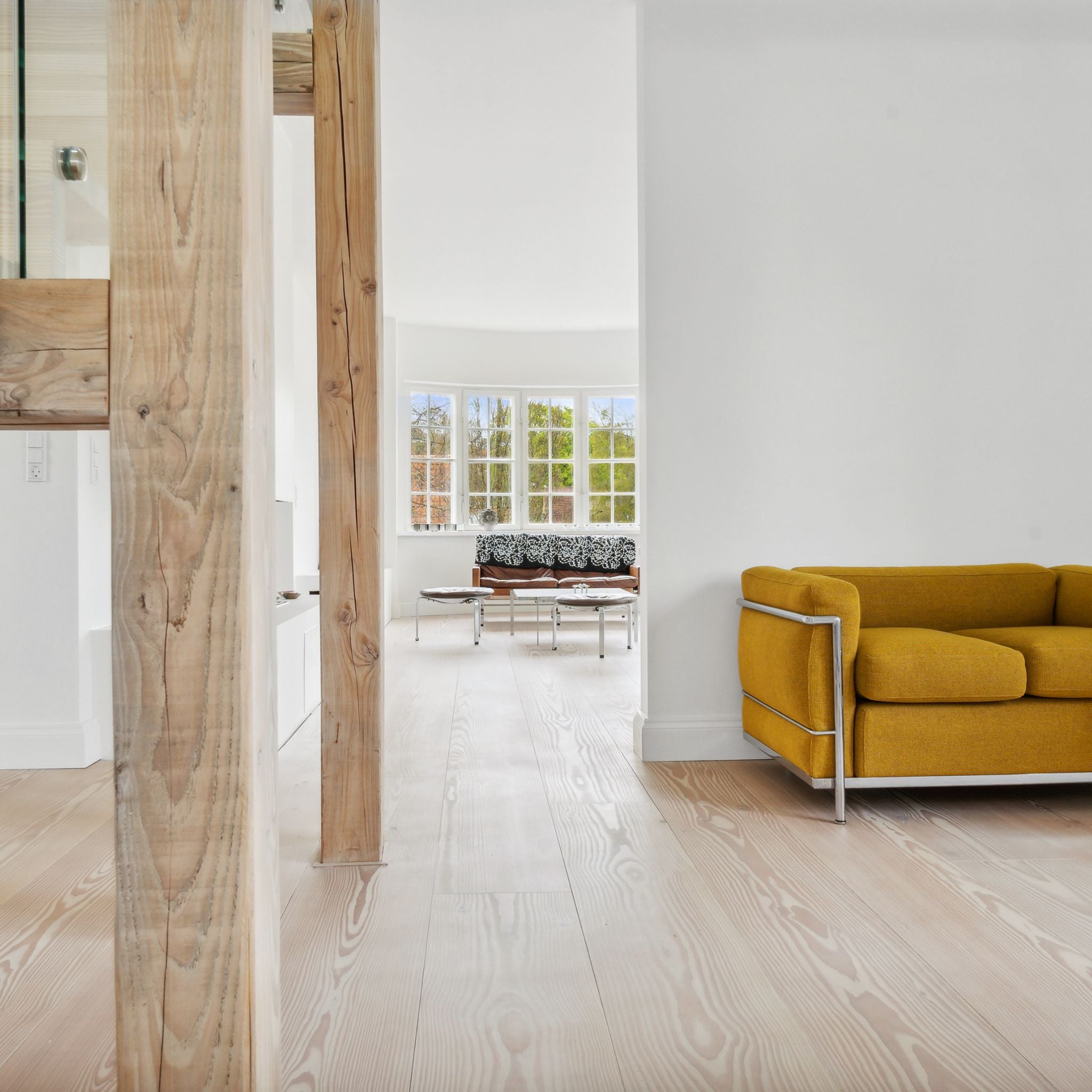
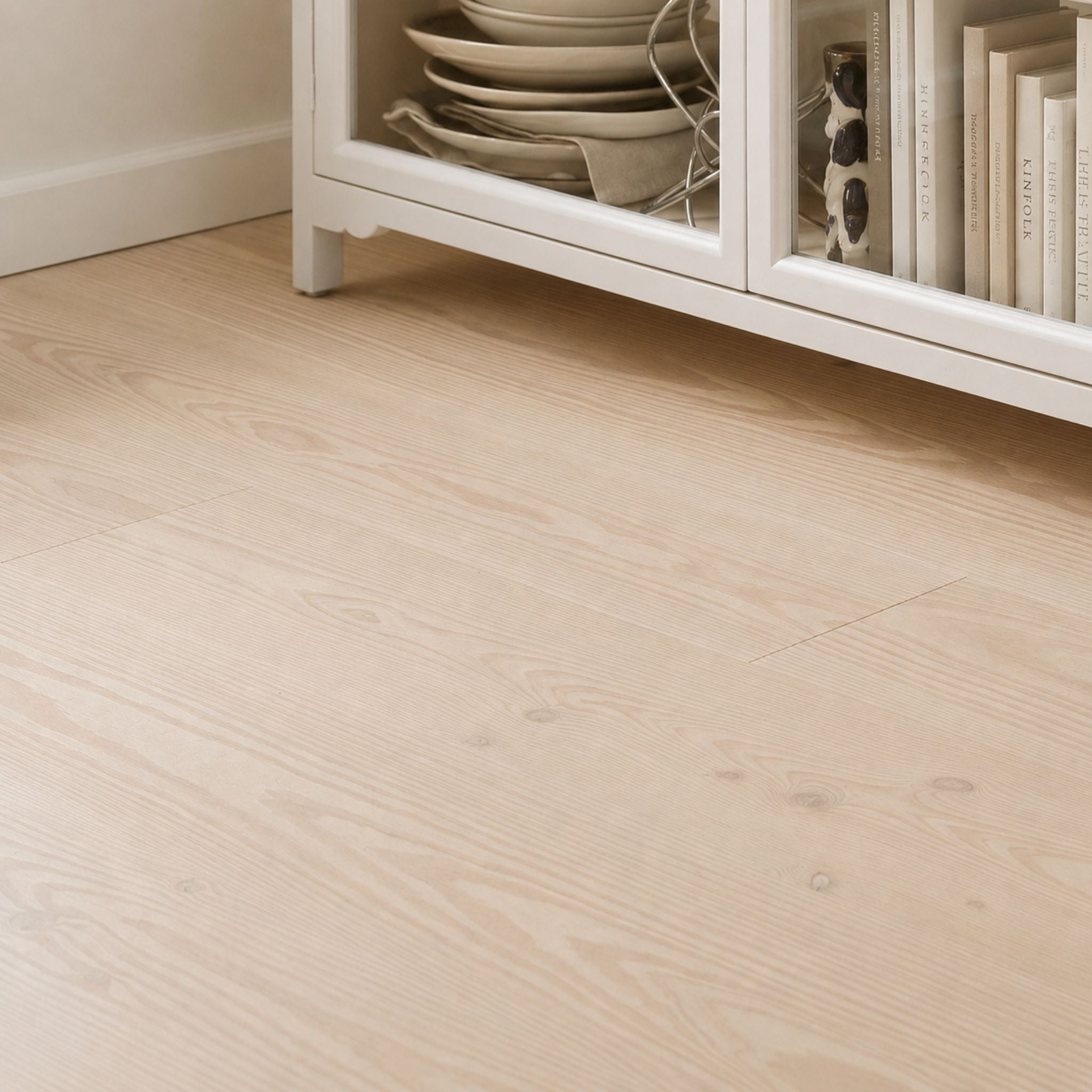
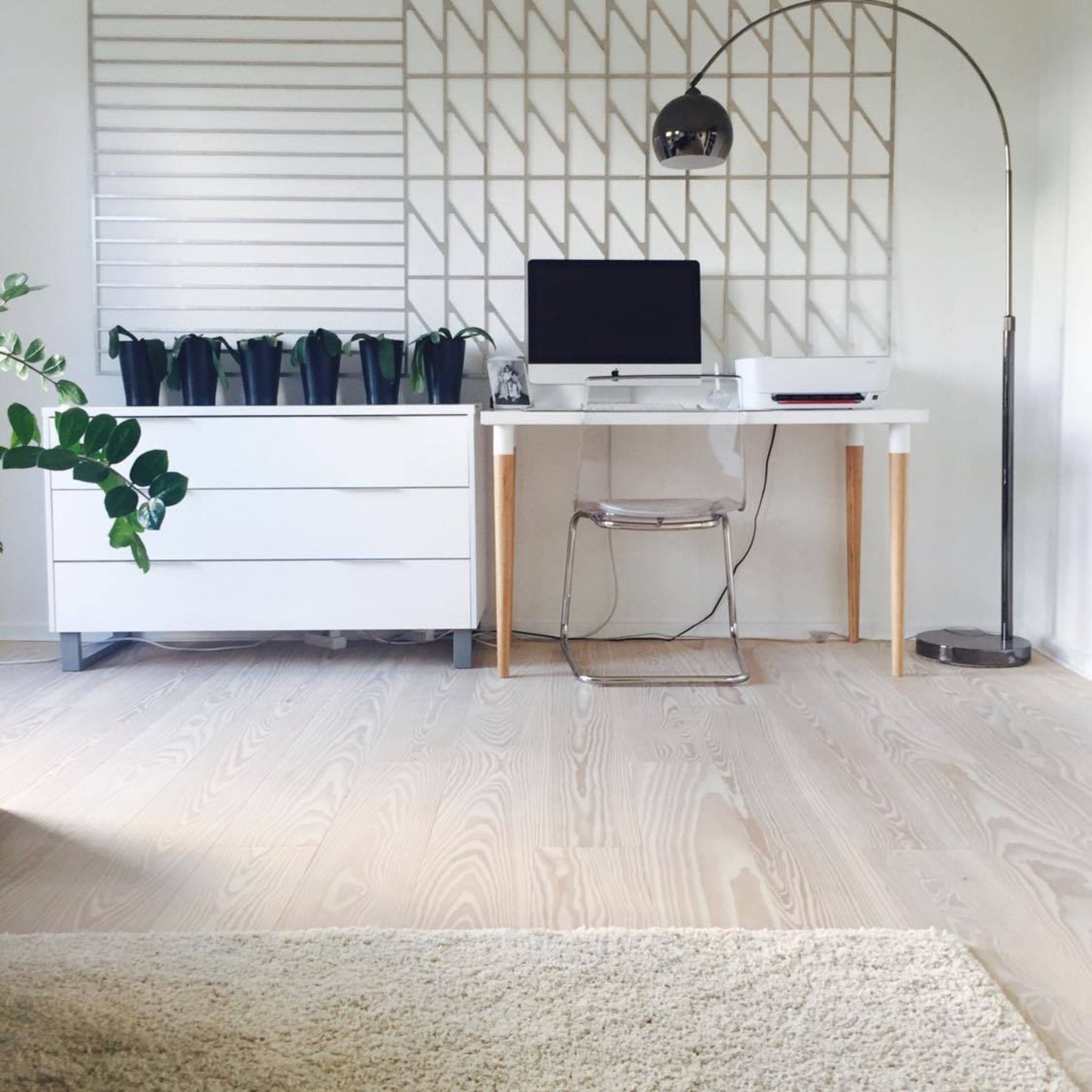
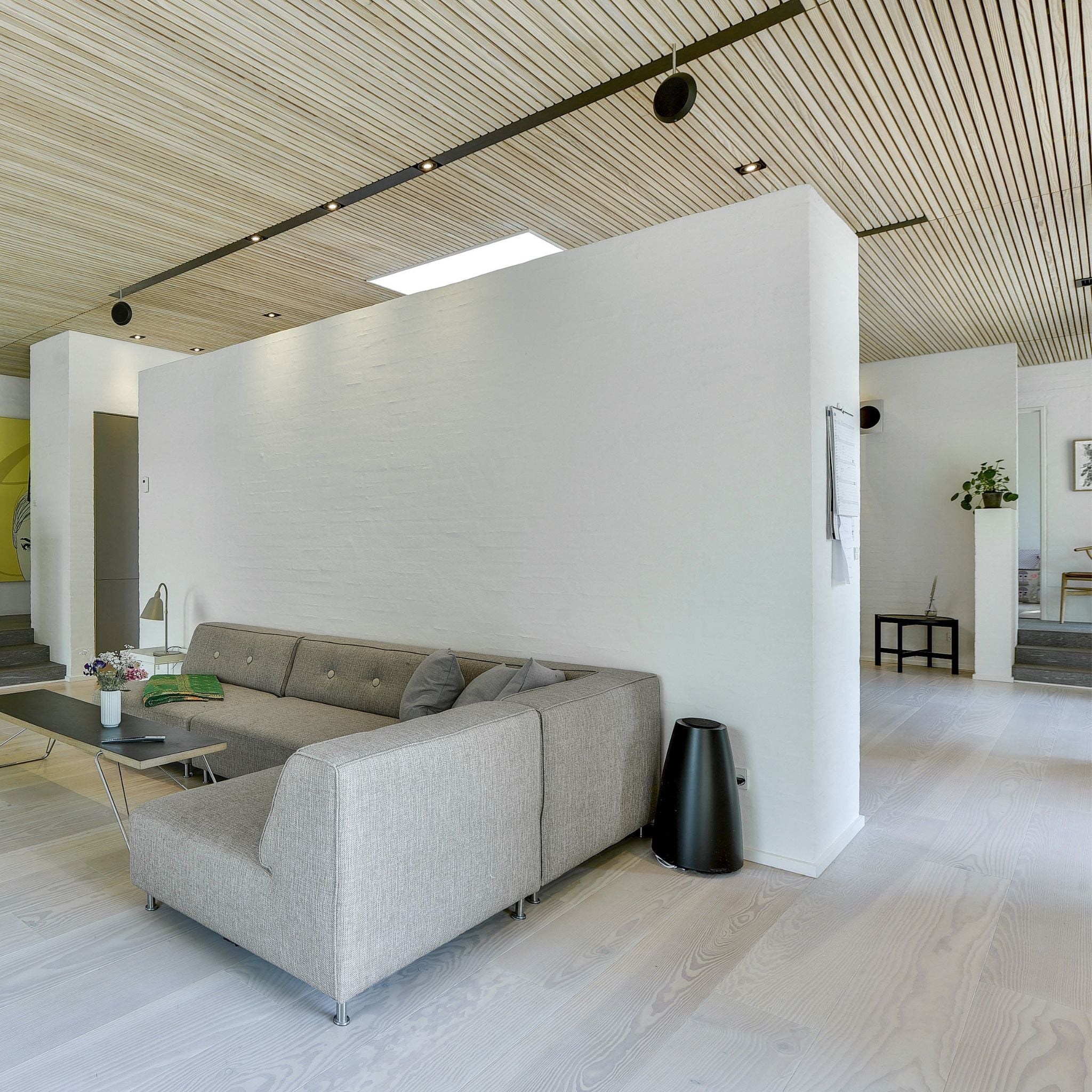
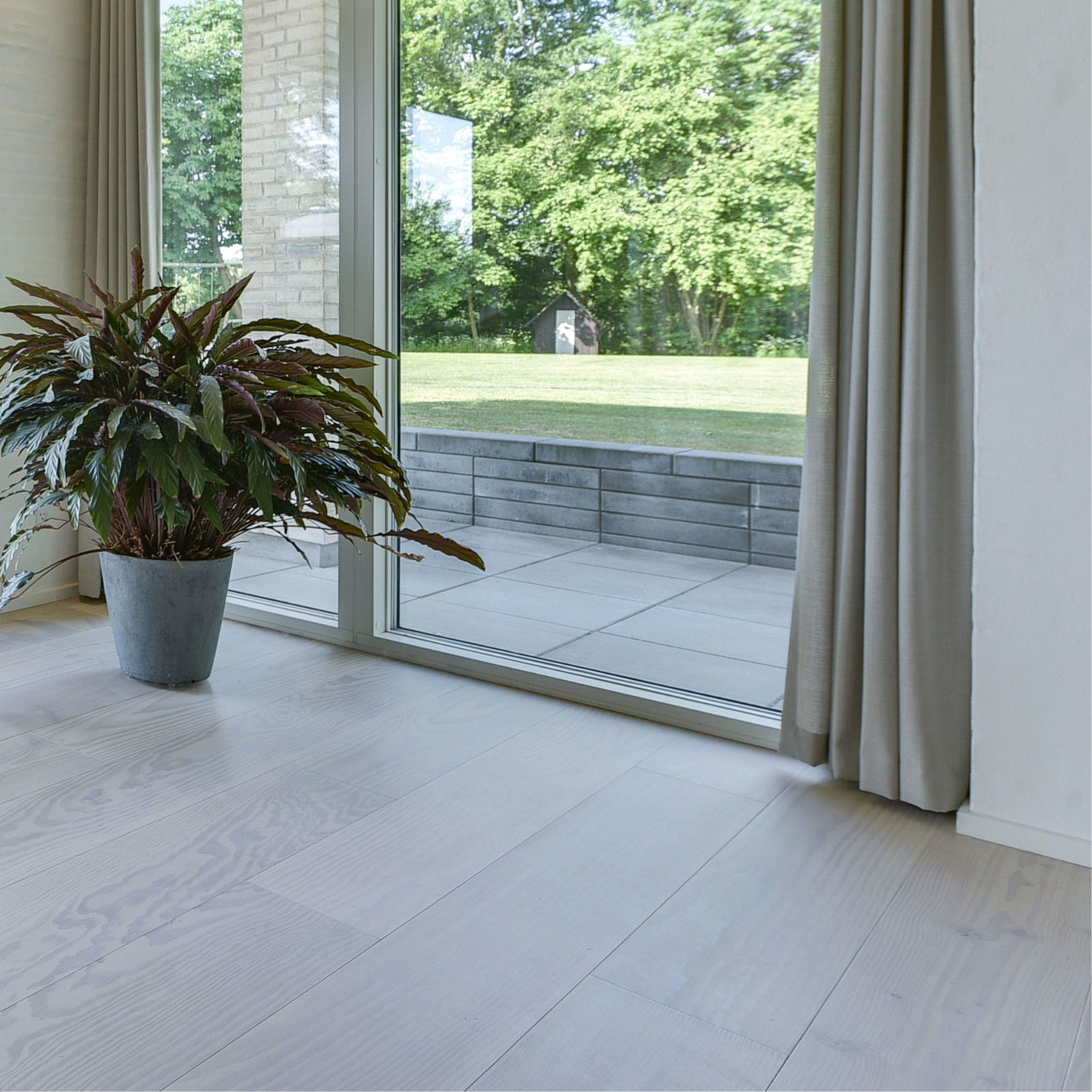
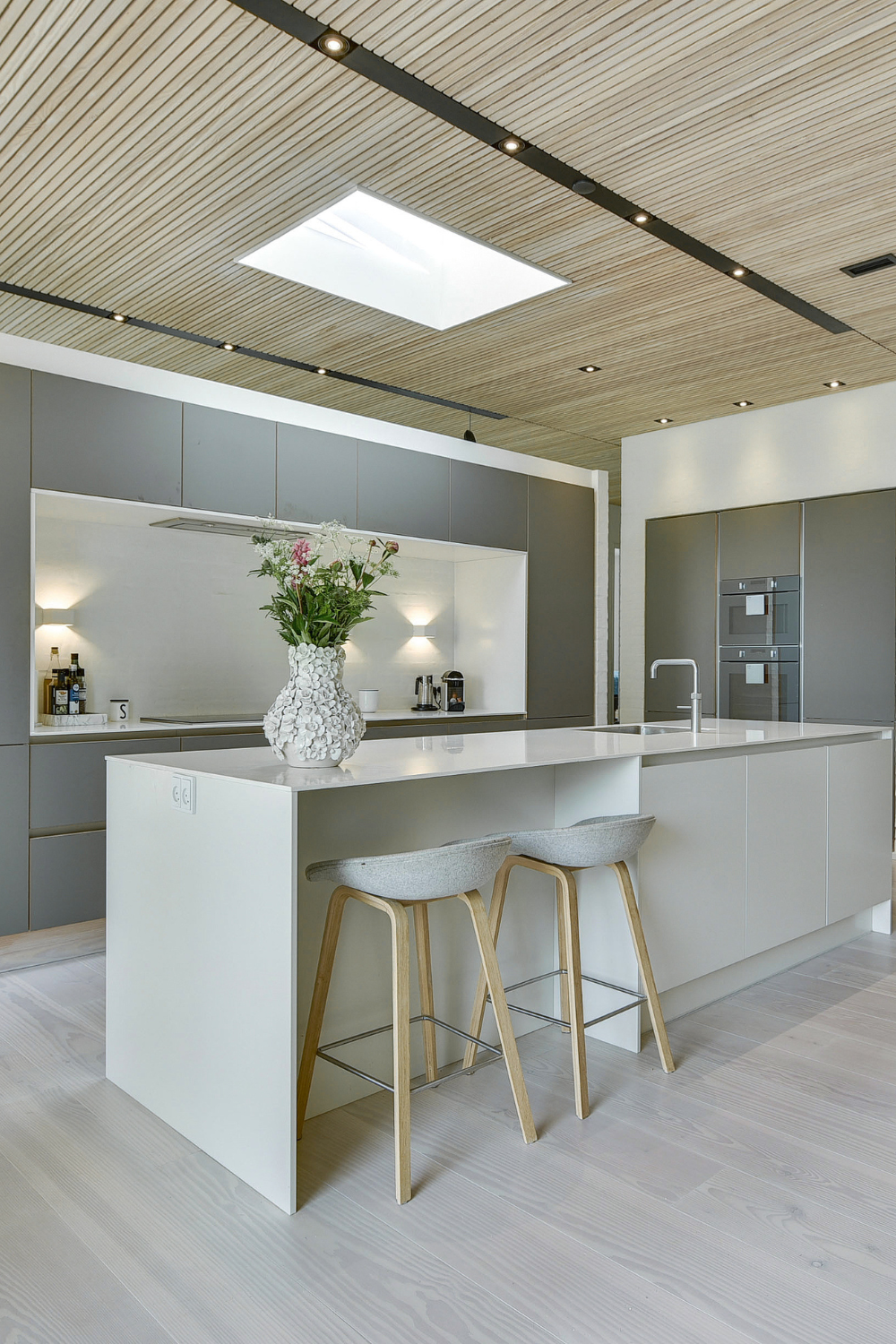
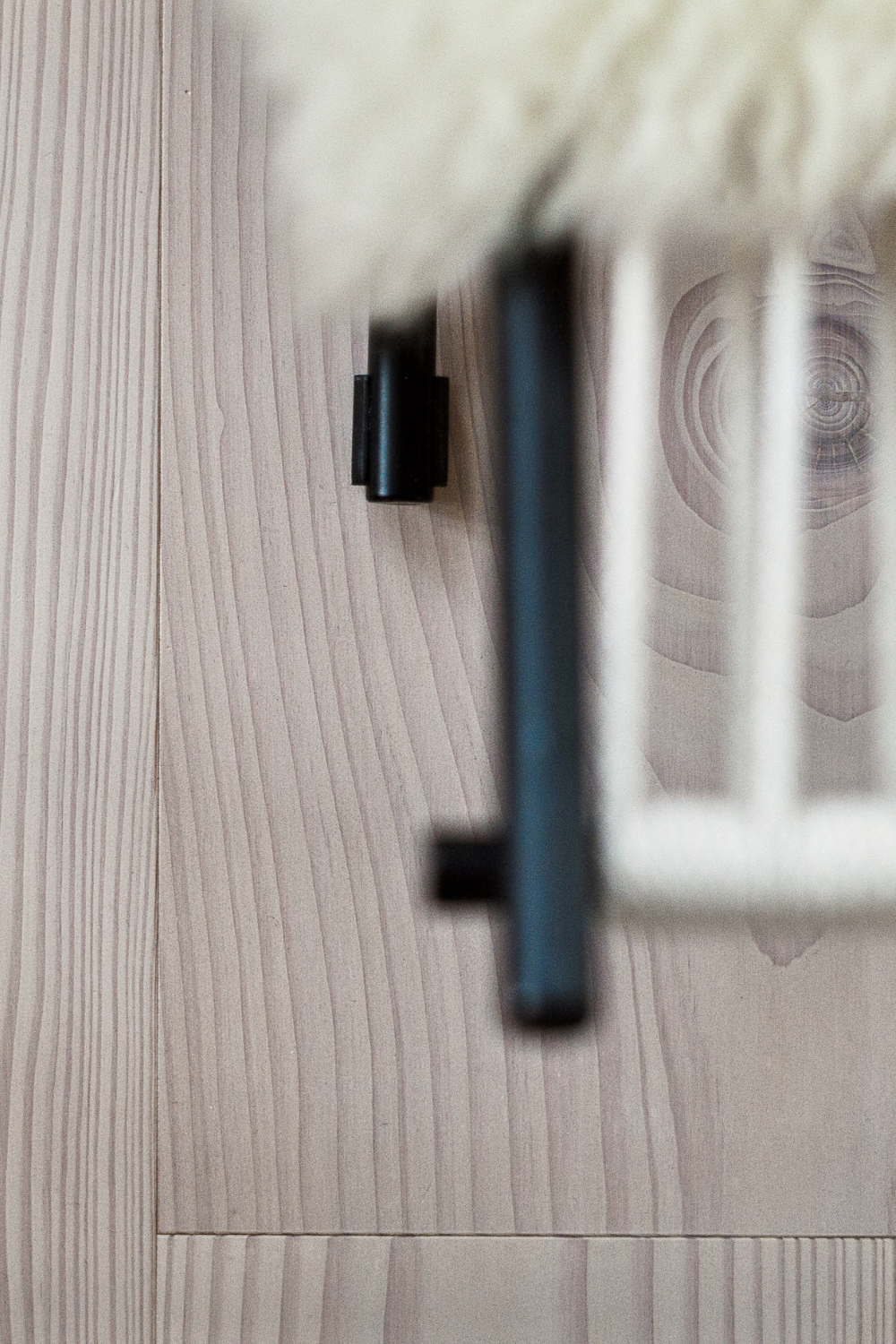
Douglas wood flooring is a material with a unique tranquility and lightness in its expression. At Wiking Gulve, we work with Douglas as a type of wood where light hues, harmonious grain patterns, and natural elegance create a floor with distinct architectural character.
It is a material that adds warmth to a room without dominating – and creates a natural balance between the exclusive and the relaxed.
choice of wood
Douglas - Pseudotsuga Menziesii
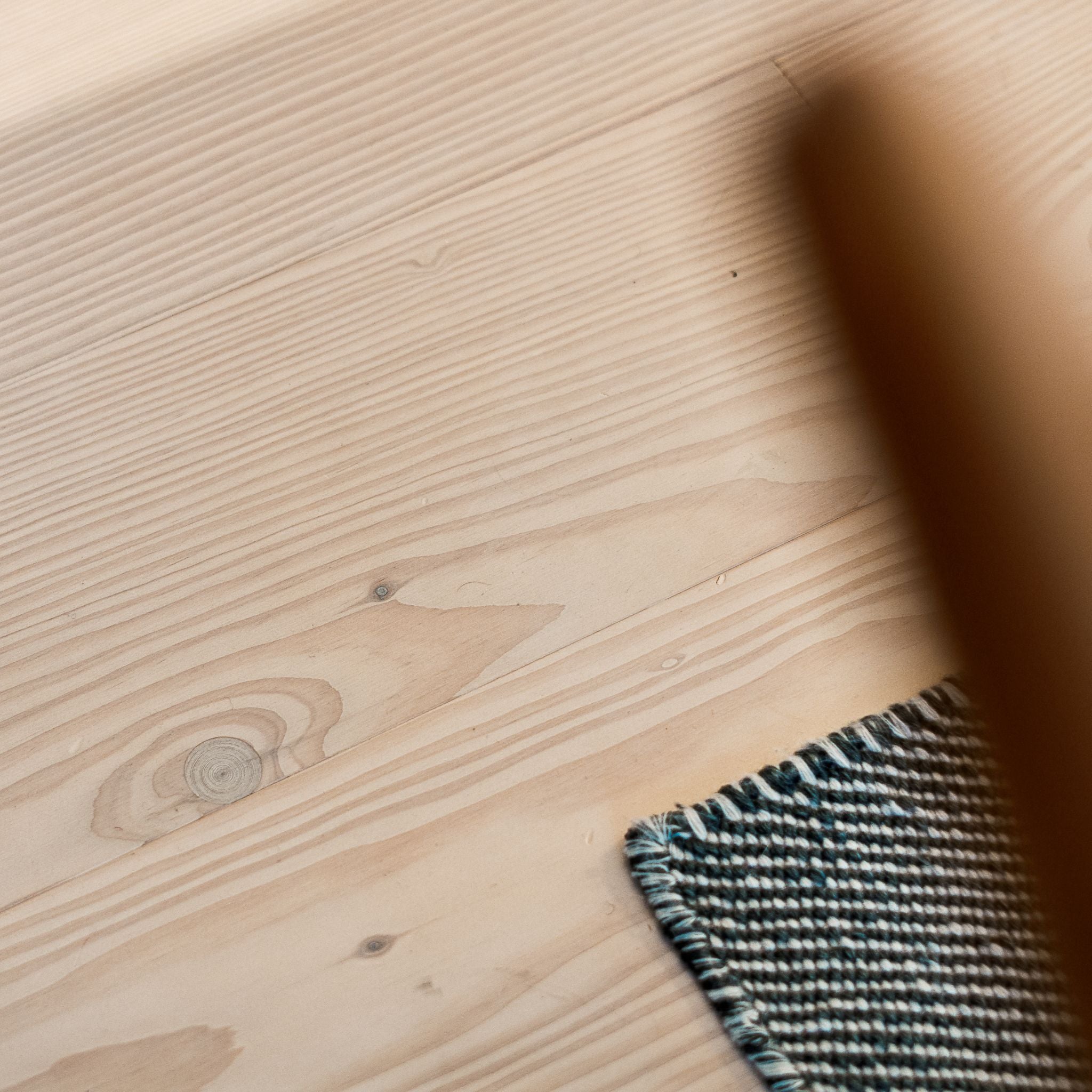
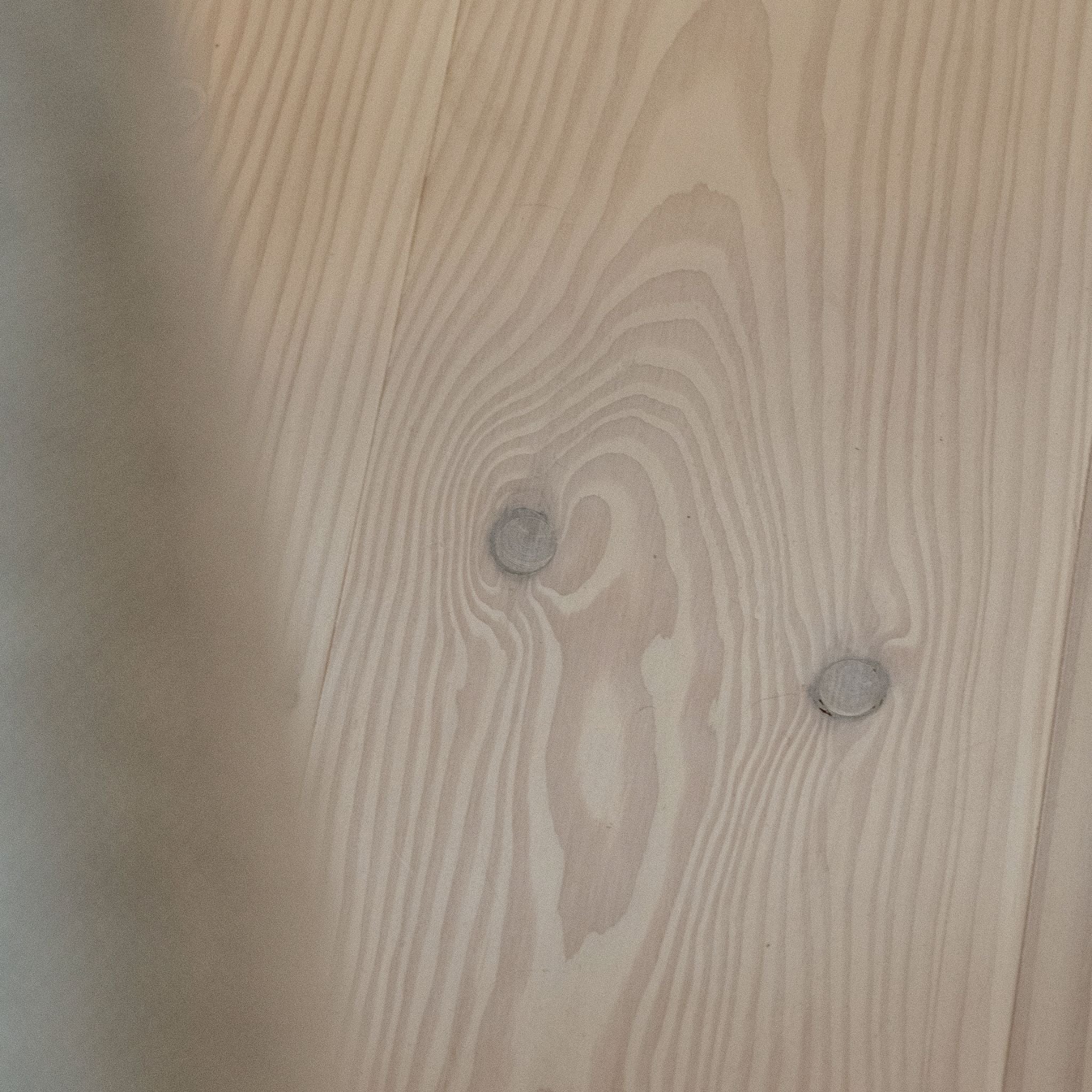
Douglas plank floors are a natural product, and just as no two trees are identical, the finished floor also varies beautifully in colour and structure. The actual structure of the wood consists of varying grain patterns of the light, softer springwood and the darker, slightly harder autumnwood, which can result in differences in hardness within a single plank.
Douglas, also known as Douglas fir, is a popular type of wood for flooring due to its beautiful, warm appearance and broad grain and reddish hue, which gives a natural and characterful look. Douglas wood is a relatively soft wood type compared to, for example, oak or ash. This means that Douglas floors are more susceptible to pressure marks, scratches, and wear, especially in high-traffic areas or where shoes with hard soles are used. Despite its softness, many still choose Douglas floors because of their aesthetics and ability to develop a beautiful patina over time. A Douglas floor will, over time, develop a warm glow and a unique character that many find charming.
Douglas fir wood floors
maintenance
This type of wood may have hairline cracks (up to 0.5 mm in width) upon delivery. Due to its grain patterns, this type of wood is also prone to developing cracks in the future if you do not pay extra attention to saturating the surface with oil or soap after installation and before use, as well as the subsequent care and maintenance.
Douglas fir is categorized as a softwood floor, which is why care and maintenance are of crucial importance to extend the floor's lifespan. Felt pads under furniture and doormats at entrances are also important elements in this regard.
We recommend that our care and maintenance guides are thoroughly studied before your floor is put into use.
Find all products under our complementary products, and always save 10% on care products by signing up for our customer club. Sign up here.
Do you have any questions about our Douglas flooring?
We are always ready to answer your questions!
Contact usDouglas fir wood floor with light serenity and natural depth
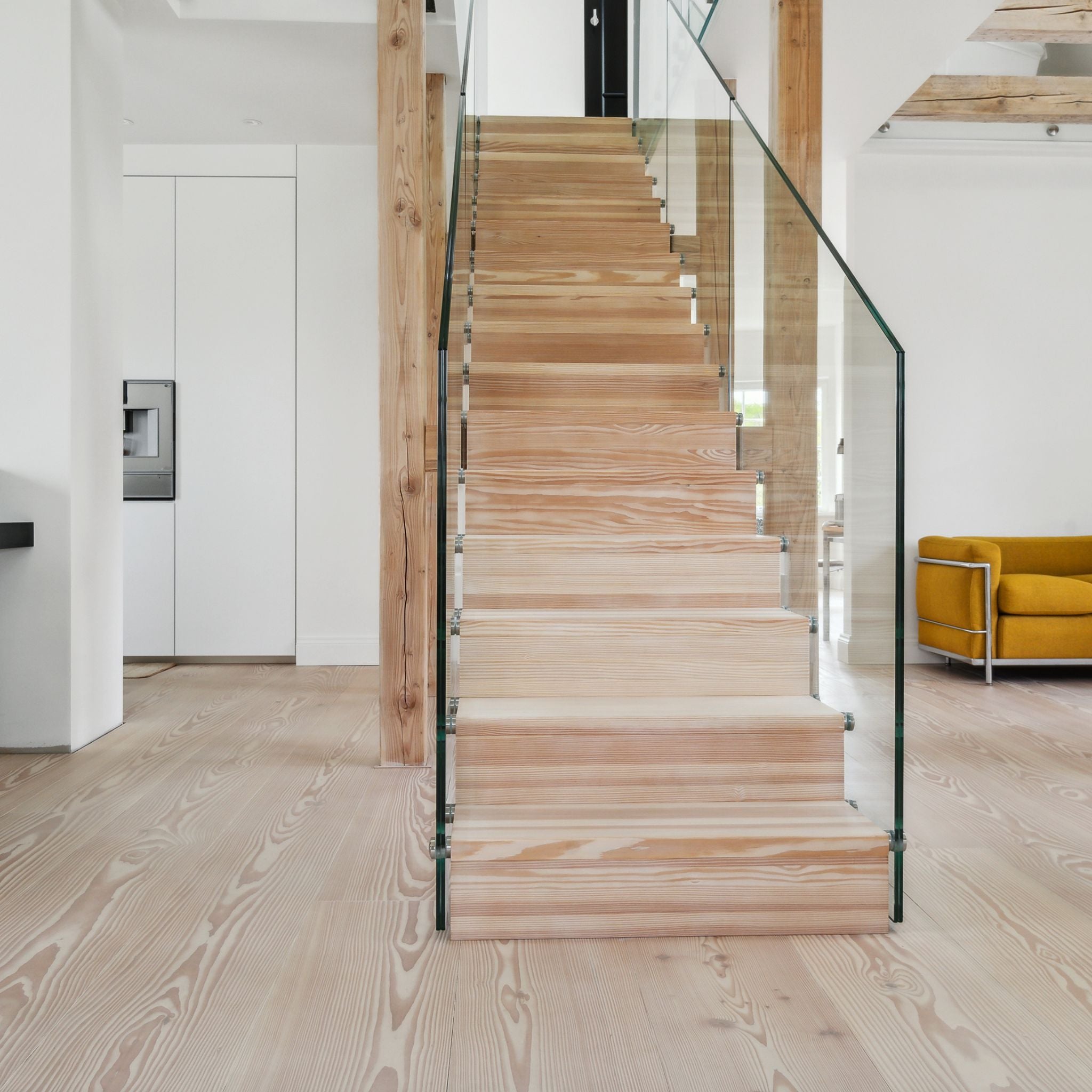
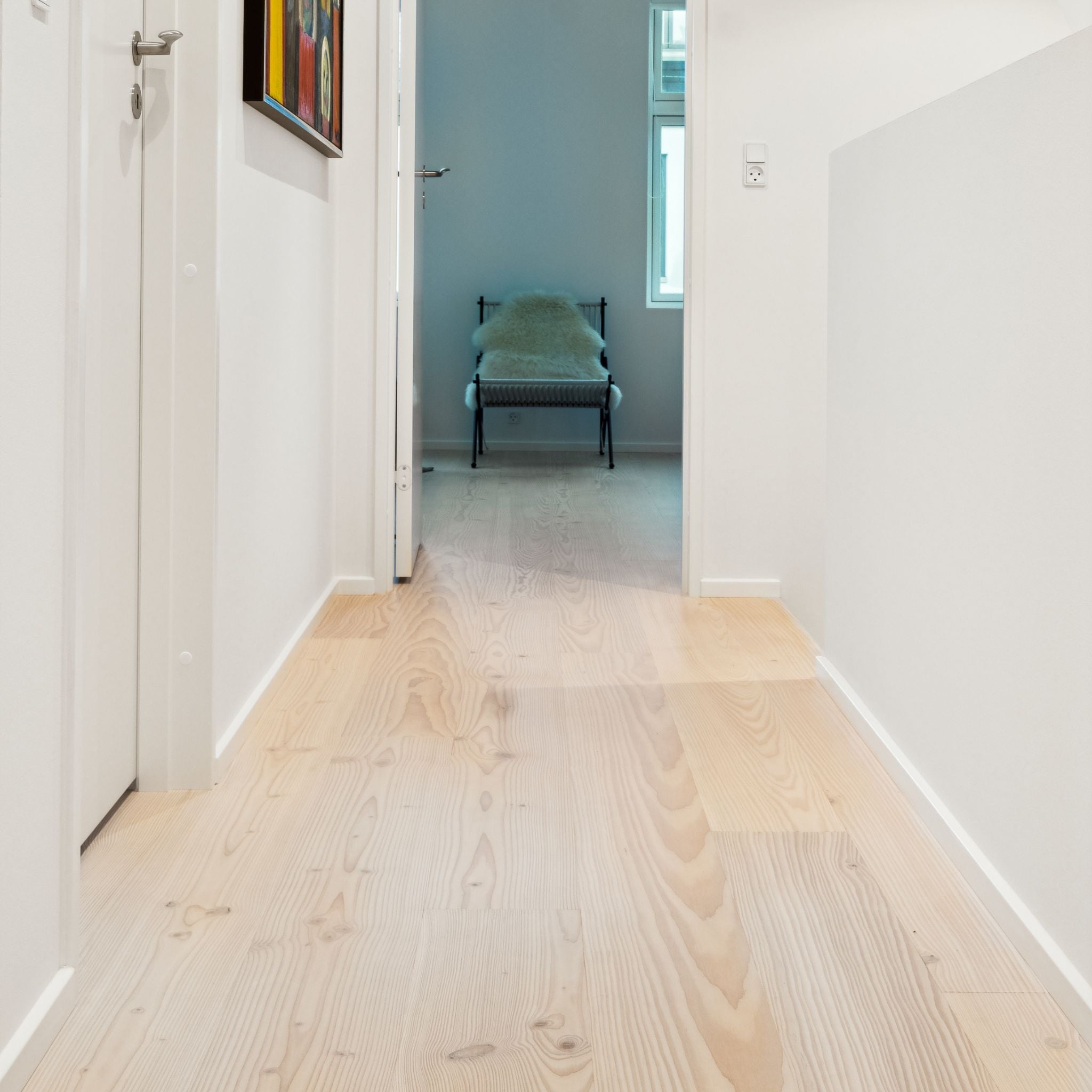
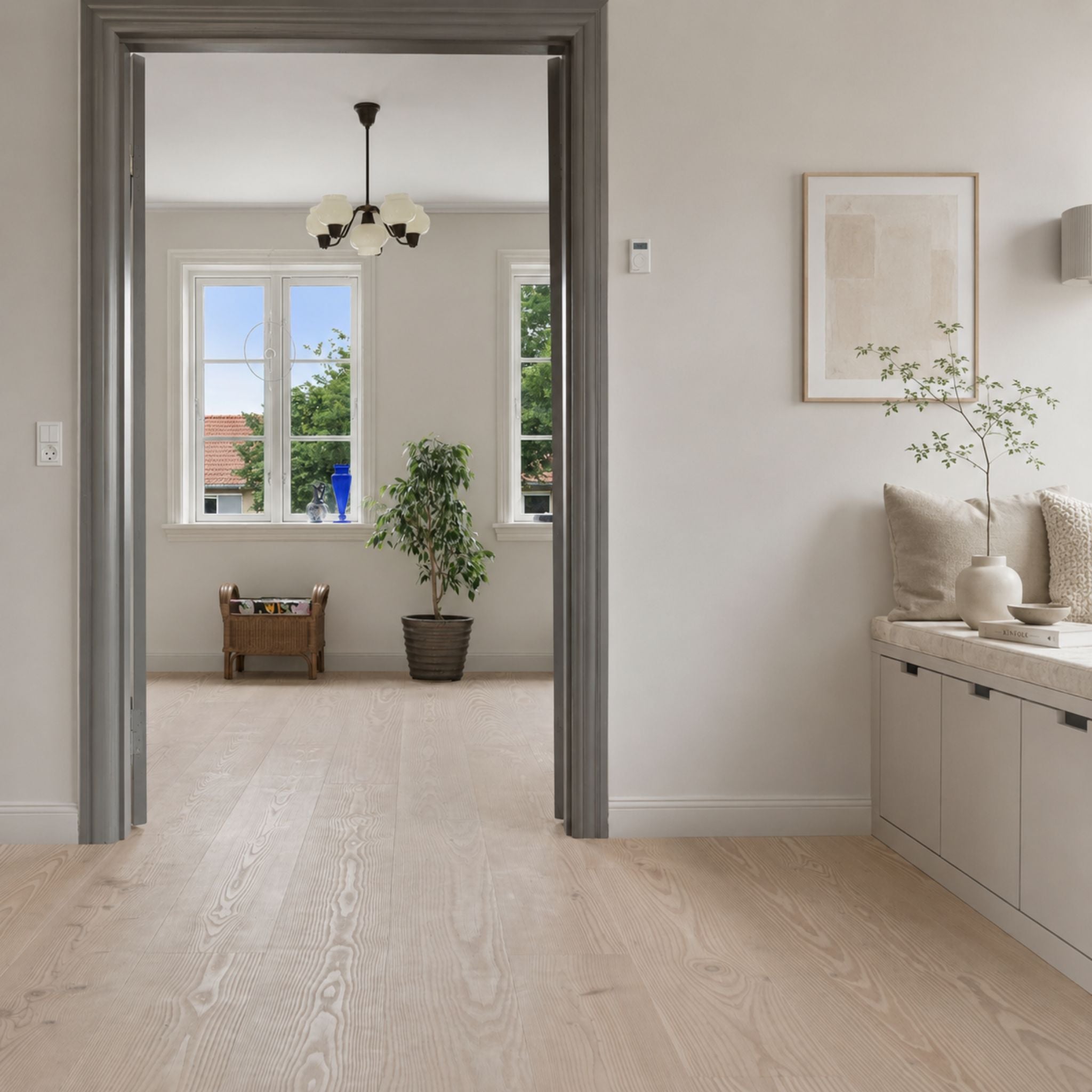
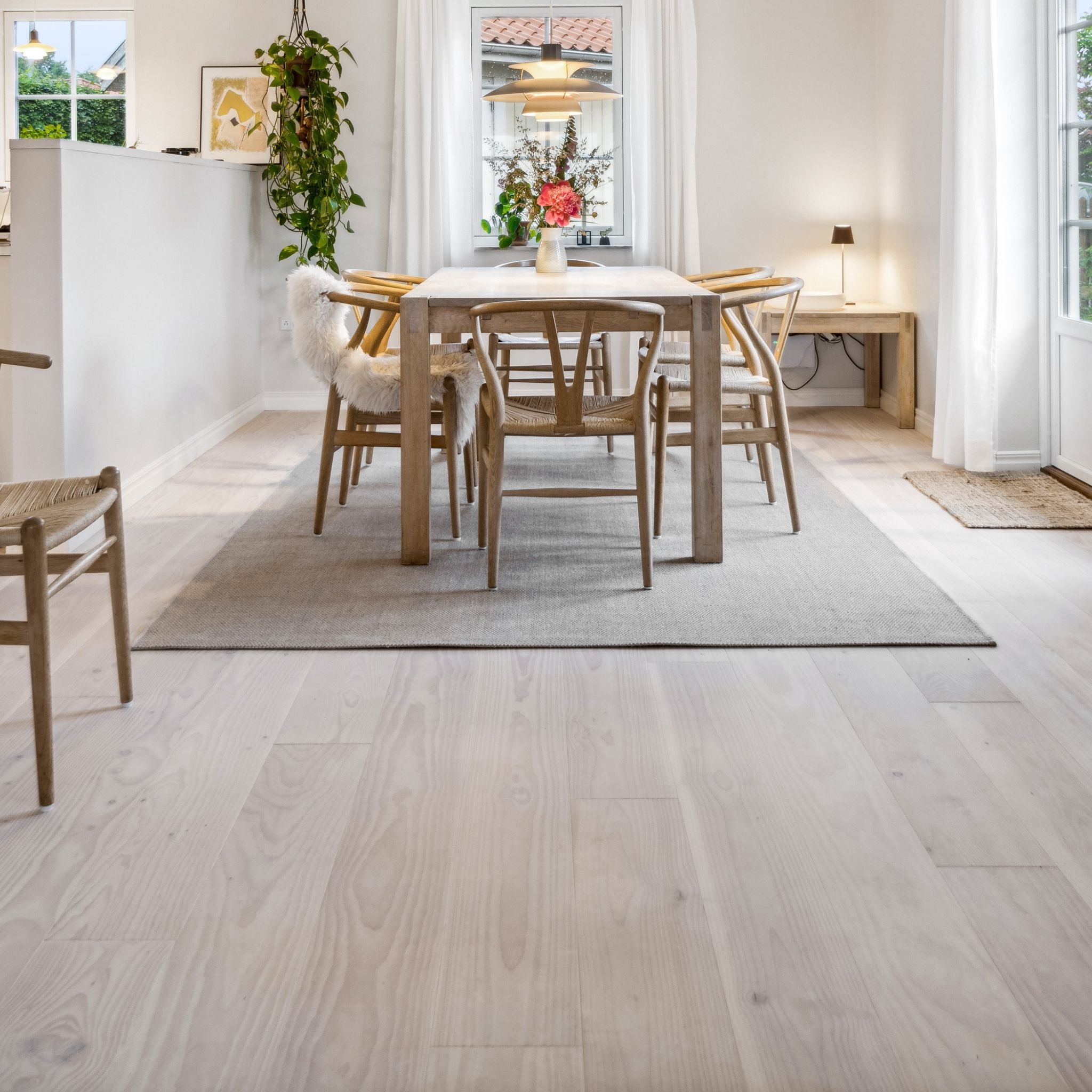
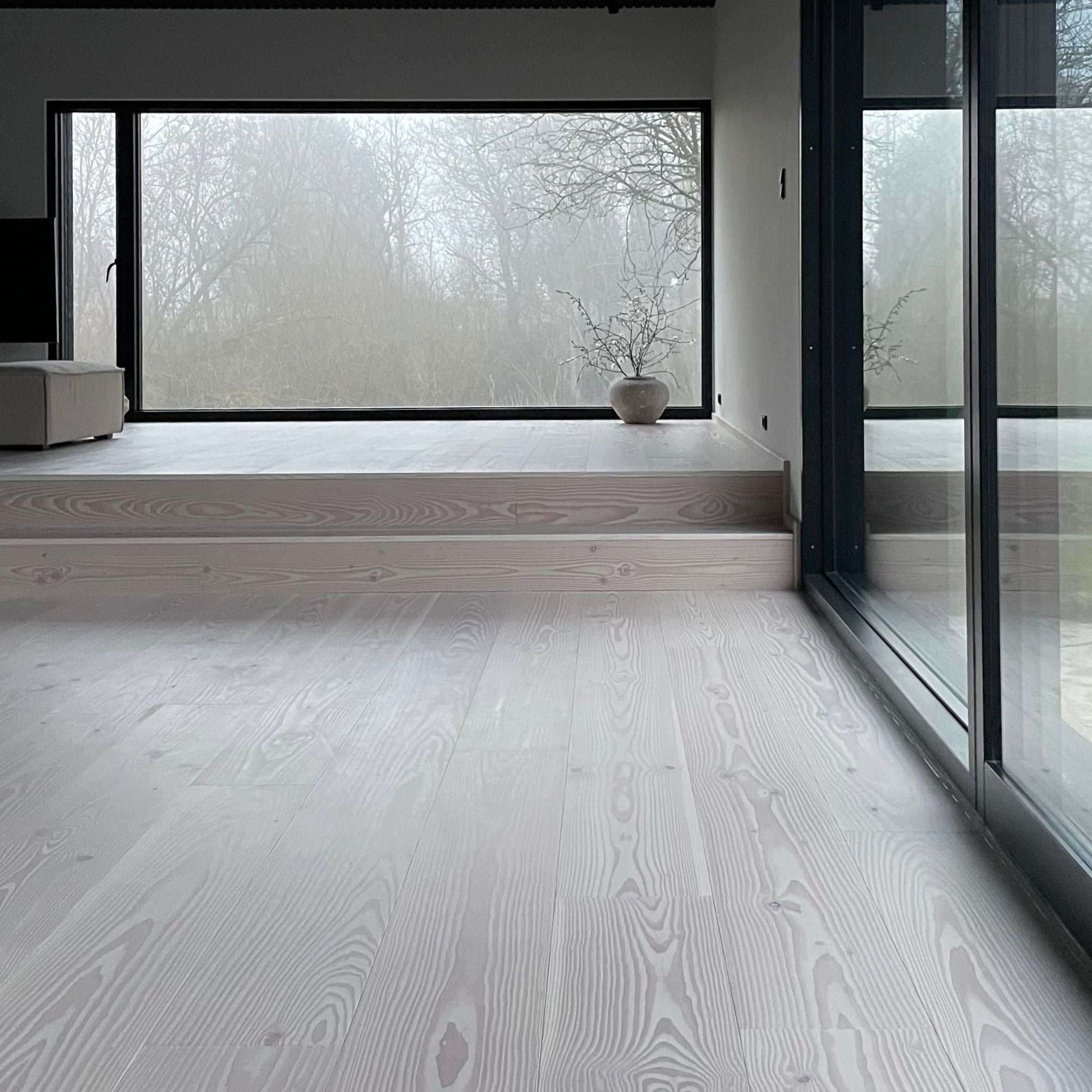
Douglas fir is known for its light color and characteristic pink glow, which gives the floor a warm and lively expression. The wood's structure is generally calm and uniform with few knots, making Douglas fir particularly suitable for larger floor areas, where the material's lines and grain patterns are allowed to stand out clearly.
Variations from plank to plank occur naturally and emphasize the material's authenticity. The harmonious expression makes Douglas fir flooring an obvious choice in modern architecture, where light materials and calm surfaces play a central role.
A soft wood with a unique visual appeal
Douglas fir belongs to the conifer family and is a softer type of wood than, for example, oak and ash. This gives the floor a warm and pleasant comfort underfoot, as well as a more organic and lively appearance over time.
At the same time, the nature of the material means that minor pressure marks may occur with daily use. However, these often become less visible again with correct maintenance and refreshment of the surface.
Douglas fir also has a distinctive grain pattern, which is part of the wood's special identity. Over time, hairline cracks may appear on the wood's surface, which is a natural characteristic of this type of wood. These small variations and movements help to emphasize the floor's authentic character and the dynamic interplay between the material and its surroundings.
Is Douglas the right choice?
Are you in doubt?
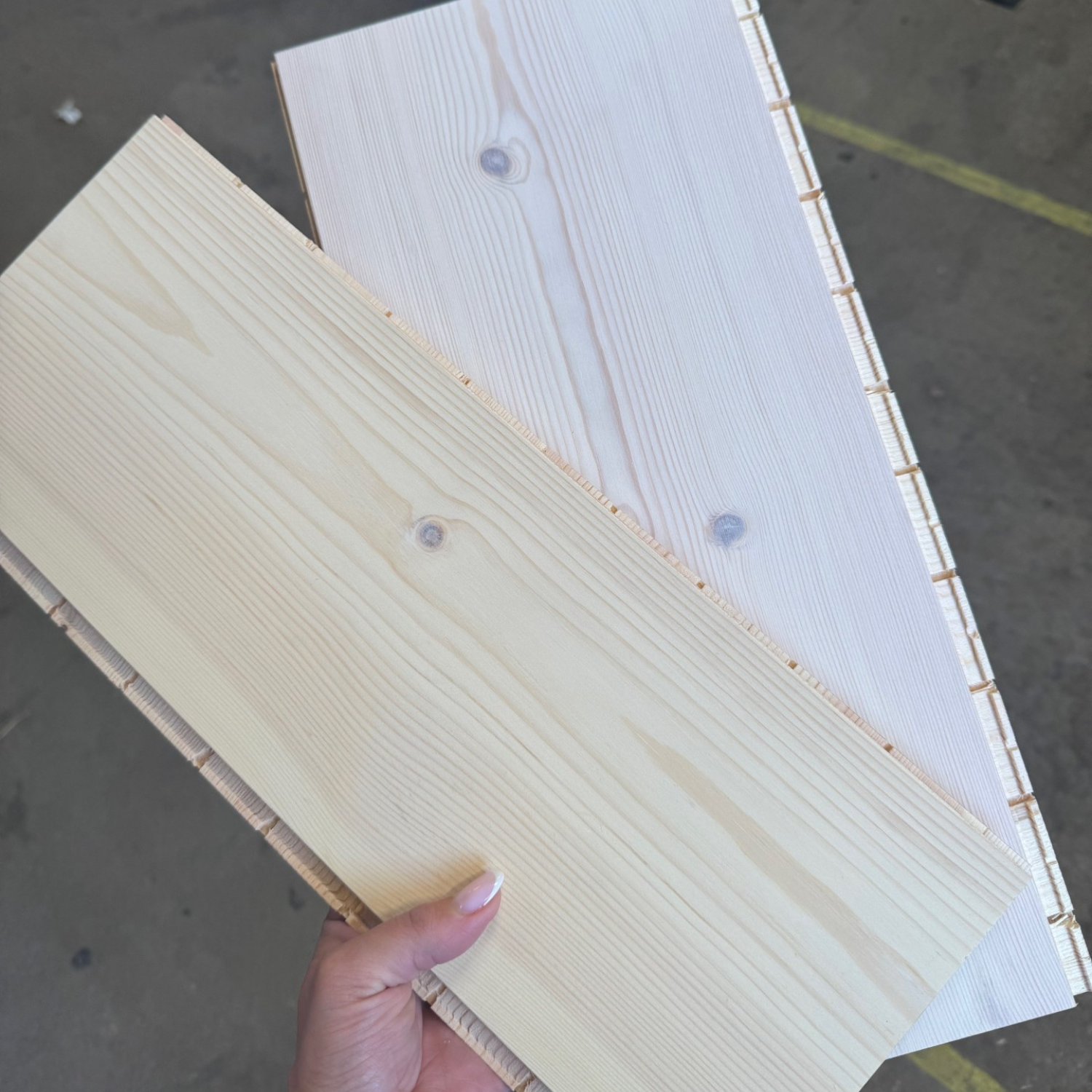
Order a wood sample.
We will send a wood sample directly to your home, so you can calmly and with your own senses see and feel how the chosen wood floor will fit into your dreams for your home.
3-layer construction – stability in modern plank floors
All Wiking Gulve Douglas plank floors are constructed with 3 layers to ensure high stability and a long lifespan. The middle layer is placed across the wood fibers, which reduces the wood's natural movements by up to 70% compared to traditional solid floors.
This construction makes the floor more stable in, for example, modern homes with varying temperature and humidity conditions, and makes it particularly suitable for underfloor heating. The top layer consists of carefully selected, high-quality Douglas wood, which allows for maintenance and sanding throughout the floor's lifespan. The result is a plank floor that combines an exclusive visual appearance with technical stability and modern functionality.
Care and surface treatment
To preserve the wood's strength and visual depth, proper maintenance is an important part of the experience of owning a Douglas fir floor.
Especially after installation, it is important to thoroughly saturate the surface with oil or soap to optimally protect the wood from the beginning.
Ongoing care helps reduce drying out and supports the wood's natural stability over the years.
When properly maintained, Douglas fir develops a beautiful patina and, over time, acquires an even more refined expression.
Douglas FAQ
All care and maintenance products mentioned can be purchased in our webshop
Douglas fir flooring has a beautiful texture and strong aesthetic appeal. The wood's light color with a rosy glow and prominent, wide grain gives the floor an elegant and natural look.
Douglas and Douglas Mammoth.
- Untreated
- Lye & White Oil
The wear layer is 4 mm as standard. If the floor needs to be refreshed by sanding, you should expect the wear layer to be reduced by 0.5 – 0.7 mm.
If there are clear signs of wear, stains, a desire to change the surface, or other reasons, it may require a slightly deeper sanding, which will further reduce the wear layer.
- Douglas: Douglas is characterized by its harmonious grain patterns and is a bright and warm wooden floor with a beautiful reddish glow.
- Douglas Mammoth: The Mammoth series is Wiking Gulve's exclusive series of extra wide and long planks.
Douglas is part of the coniferous family. It is a softer wood species, which forms a calm pattern and is very well suited for rooms with large floor areas, among others.
In this wood species, hairline cracks (up to 0.5 mm in width) may occur.
Due to the grain patterns, this type of wood is also susceptible to future crack development if you are not extra careful to saturate the surface with oil or soap after installation and before use, as well as with subsequent care and maintenance.
Douglas fir generally has few knots, but this can vary from plank to plank – nature decides.
Douglas fir flooring is in a league of its own. However, similar grain patterns and purity in the wood can be seen in Pitch Pine, which has fewer knots.
Douglas is categorized as a softwood floor, and is more susceptible to signs of wear and pressure marks. However, these marks are easy to rectify with maintenance, and often most soft marks can disappear with just a floor wash or refreshing of the oil.
Douglas fir flooring supplied by Wiking Gulve, which has been pre-treated with clear lye and white oil, must be saturated after installation. The oil we use is a breathable oil, which means it is essentially ready for use. However, we recommend post-treatment before use if the floor is installed in a high-traffic area (e.g., kitchen or hallway).
Oil Saturation:
Immediately after installation, the floor must be saturated with oil. Use Trip Trap Oil Care White or Natural and follow the instructions on the container. The floor should be treated 1 time, after which you can use your new Wiking floor as soon as the oil has cured according to the manufacturer's instructions.
Soap Saturation:
Immediately after installation, the floor must be saturated with white-pigmented soap.
Use Trip Trap Natural Soap White in a mixing ratio of 1:10. The floor should be washed 3 times over 2 days. This allows the wood to dry between treatments. After the third treatment and once the floor is dry, you can move into your new Wiking floor.
Depending on the type of surface treatment you have chosen, there are, of course, differences in ongoing maintenance.
Oil-treated floor:
We recommend that you regularly maintain your oiled floor with Trip Trap Oil Care White once a year. If the floor is installed in a high-traffic area, such as a hallway or kitchen, you should expect it to need more frequent care than if the floor is in a bedroom. Regular floor cleaning can usually be done with clean lukewarm water or Trip Trap Natural Soap White. You can advantageously wash the floor with Trip Trap Oil Soap every 4-5 washes to slightly postpone the next oil treatment, as this adds a little oil to the surface. However, you should not use oil soap with every floor wash, as the wood can become oversaturated and develop a greasy oil layer, which will bind dust and dirt to the surface.
Soap-treated floor:
To ensure continuous good saturation of the floor, we recommend that you wash the floor with Trip Trap Natural Soap White more often than if the wood was oil-saturated. Always follow the instructions on the container regarding the mixing ratio. If you feel that your floor is well saturated but needs cleaning, you can advantageously omit the soap and only use lukewarm water.
If you wish to lighten the surface, you can advantageously wash floors with Trip Trap Natural Soap Extra White, as this contains more white pigment and will eventually lighten the surface. If you want to tone down the light color, you can use Trip Trap Natural Soap or completely omit the soap in the washing water if the surface is already well saturated. Changing the color of the surface occurs over time after repeated use of the soap.
Douglas in Modern Architecture
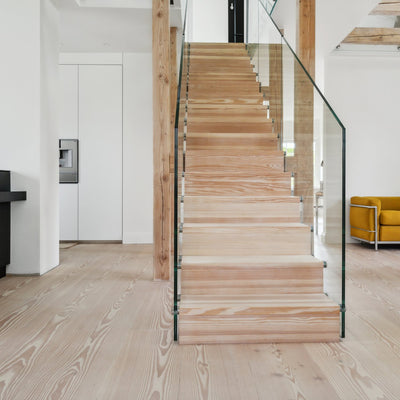
Douglas fir flooring is often used in projects where the calm and simplicity of the materials should support the room's architecture rather than dominate it. The light wood works particularly well with natural stone, light walls, steel, and other subdued materials, where the floor creates warmth and balance in the overall design.
The collection includes Douglas and Douglas Mammoth, offering different proportions and expressions depending on the project's character.
Douglas is therefore an excellent choice for private homes, summer houses, and larger architectural projects focusing on natural materials and Nordic aesthetics.
A material treated with respect
At Wiking Gulve, we work with wood as a natural material, where quality and responsibility go hand in hand. We select raw materials in collaboration with experienced foresters and use wood from responsibly managed forests in Scandinavia and Northern Europe.
Production combines modern technology with traditional craftsmanship to ensure high quality and a long lifespan for the finished floor. As part of this approach, we work with certifications such as FSC®, PEFC, and Cradle to Cradle Certified®.
Douglas wood floor
Advice and selection of Douglas wood flooring
Choosing a Douglas fir wood floor is about more than just color and width. Light incidence, room size, and the desired atmosphere play a crucial role in the overall result. At Wiking Gulve, we offer personal advice focusing on aesthetics, function, and material understanding. We help find the solution that naturally fits both the architecture and everyday life.
Experience the structure and shade of the wood
To experience the colour, structure, and surface of the wood in real life, a 0.4 m wood sample of the desired Douglas fir flooring can be ordered.

Danish-produced wooden floors

FSC, PEFC and Cradle to Cradle certified

We only use wood from 100% sustainable forests

Order a wood sample or flooring consultant

Easy assembly with Q-LOC click system & tongue/groove

Tel.: +45 97 52 56 00
Email: wiking@wikinggulve.dk
Wiking Gulve A/S
Hesthøjvej 16
DK- 7870 Roslev
CVR No.: 3232 3995
Phone hours
Monday 8.00 AM – 4.00 PM
Tuesday 8.00 AM – 4.00 PM
Wednesday 8.00 AM – 4.00 PM
Thursday 8.00 AM – 4.00 PM
Friday 8.00 AM – 3.00 PM
Showroom
Professional
Warranty Terms