Your Wiking Floor
Before, during & after installation
Advice and guidance
General installation recommendations
When purchasing a Wiking Gulv floor, we always recommend that the following advice is followed and read carefully both before, during, and after installation of the floor. If the following points are adhered to, you will experience how easy a Wiking Gulv floor can be installed, as well as the quality of your new floor. If you have any questions regarding the installation of the floor, please contact us either by email or phone.
Upon receipt
Good advice before you install
Controls
Upon receipt, check that the delivered item is the one ordered. The flooring should be stored in its unopened packaging at room temperature for at least 48 hours before installation.
During installation
In daylight, check the flooring for any damage, defects, or imperfections. Flooring installed with visible defects is NOT eligible for claims. During installation, mix planks from several packages to achieve a harmonious appearance.
Room requirements
The construction work must be completed with windows and doors installed, and the heating system must be operational. IMPORTANT! The room temperature must be 18-25 degrees Celsius during installation. The relative humidity in the room must be between 40% and 60% both during installation and subsequently when the floor is in use.
Substrate
Regardless of the subfloor, it must be dry, clean, and stable. On concrete subfloors, regardless of age, it is mandatory to use a moisture barrier. The concrete must not contain more than 85% residual moisture. The flatness of the subfloor, measured with a 2 m straightedge, must be less than ± 2 mm.
HUMIDITY
Humidity during installation
Fundamentally, with a plank-constructed floor, the dimensional changes naturally found in wood are prevented to a certain extent due to the underlying layered structure, which makes it more stable. This means that minor dimensional changes are mainly seen as a change in the distance between the floor and the wall, which is covered by a skirting board.
The most significant damages that can occur on a floating floor are usually related to extremely low humidity and/or excessively high temperatures for the underfloor heating. This will dry out the planks, leading to a high risk of damage to the wood, such as cracking and cupping (also known as washboarding). If washboarding occurs (the planks curve by becoming higher at the joints and lower in the middle), it may indicate that the humidity has been too low for an extended period. In winter, minor shrinkage cracks in and between the planks should be expected. Underfloor heating will contribute to drying out the wooden floor, and this effect is amplified if there is a wood-burning stove or heat recovery ventilation system installed. The wooden floor requires that in periods of low humidity, it may be necessary to add some moisture to the room using an electric humidifier.
humidity
As a rule of thumb, RF can be divided into the following intervals
Safe/normal
40-60% RH
Ideal range for wood flooring with only normal seasonal movement.
Risk zone
30-40% RH
- Initial shrinkage
- Small gaps/cracks may appear during the heating season
- Often harmless if temporary
- Creaking sounds from the floor surface
Critical level
Below 30% for extended periods
Here, the risk increases for:
- Significant gaps
- Cracks in boards
- Squeaky floor surface
- Surface damage
- Cupping/washboarding
High risk/damage level
Below 20-25% for an extended period
High risk of:
- Deep cracks
- Permanent deformation
- Damage to joints
- Delamination

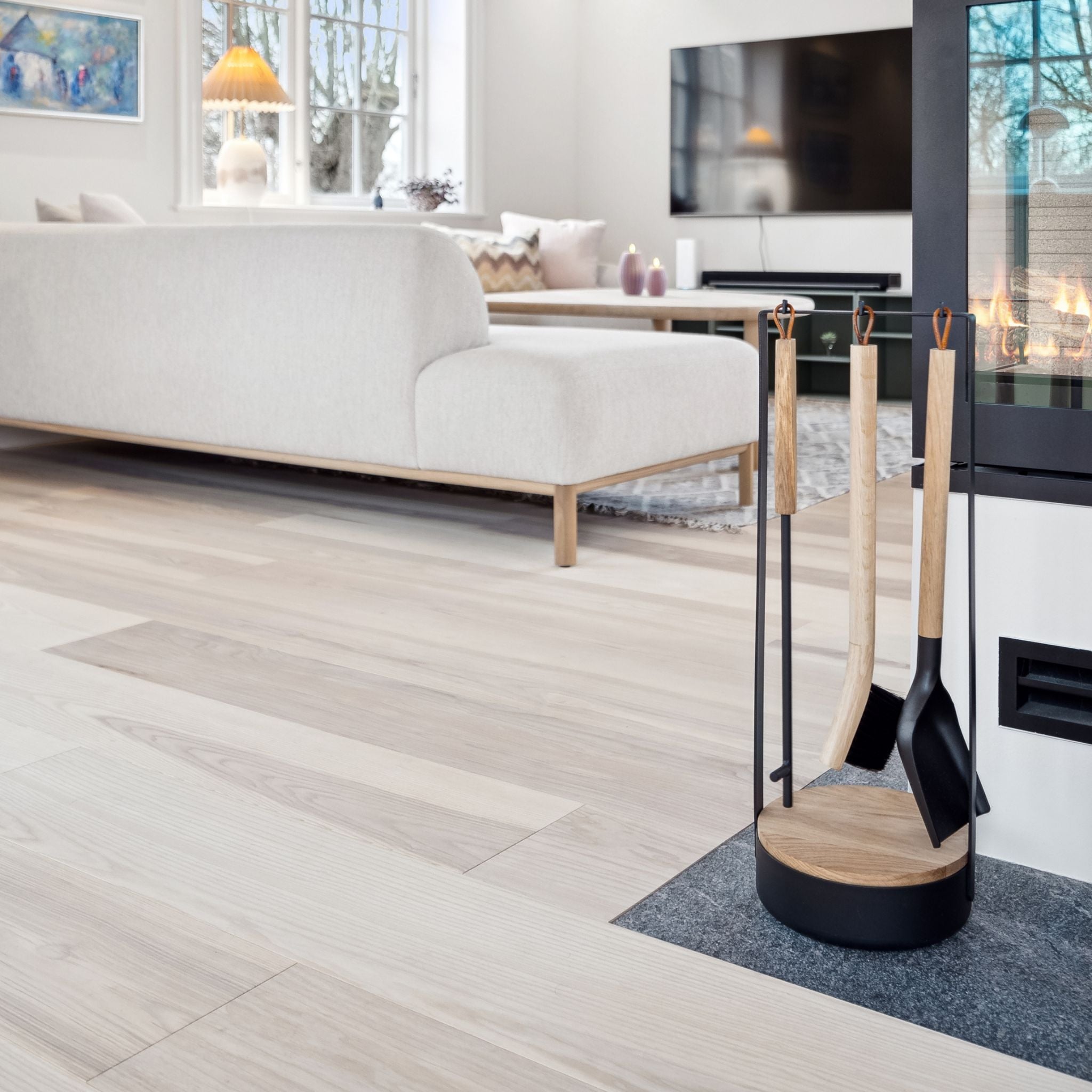

Guessing game advice
during assembly
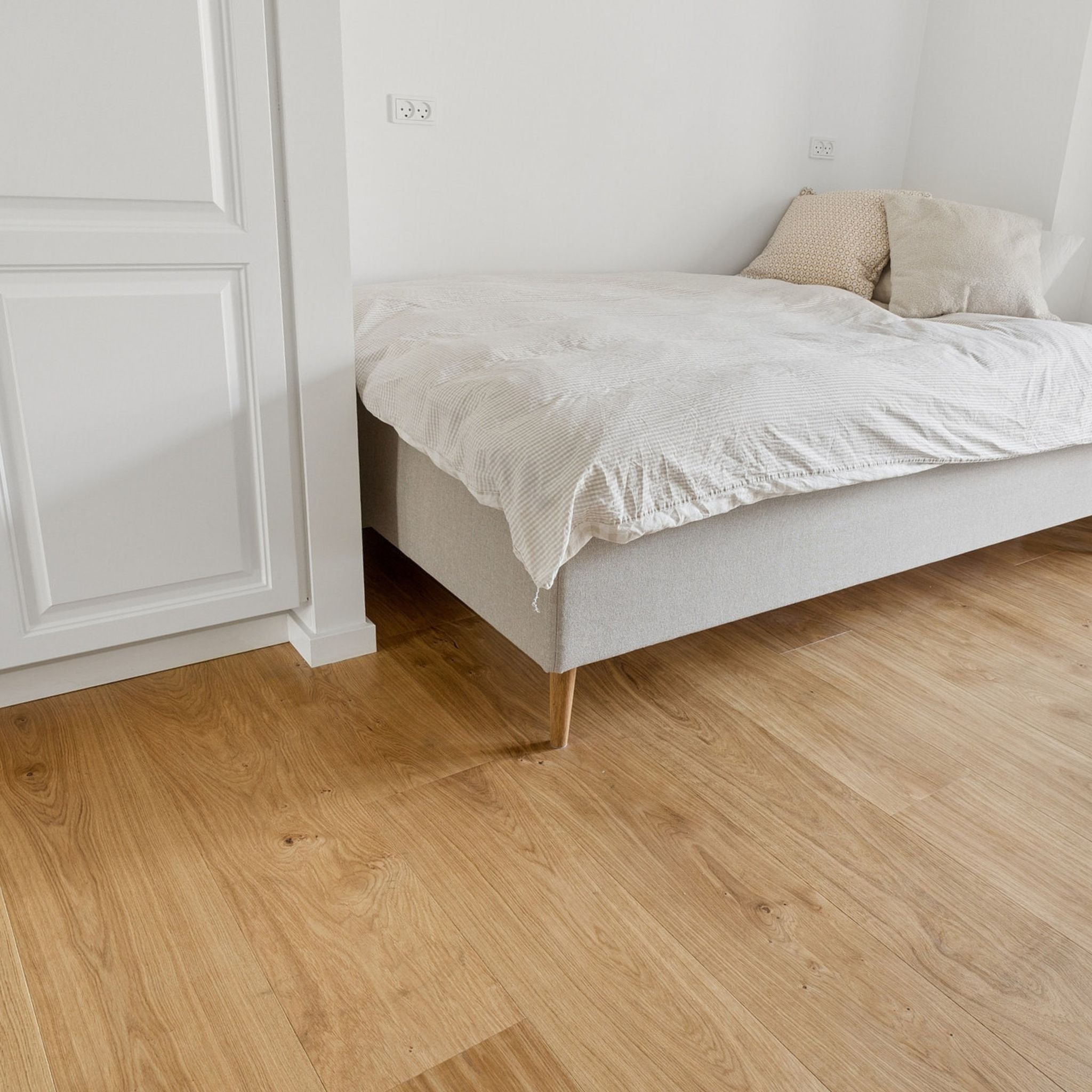
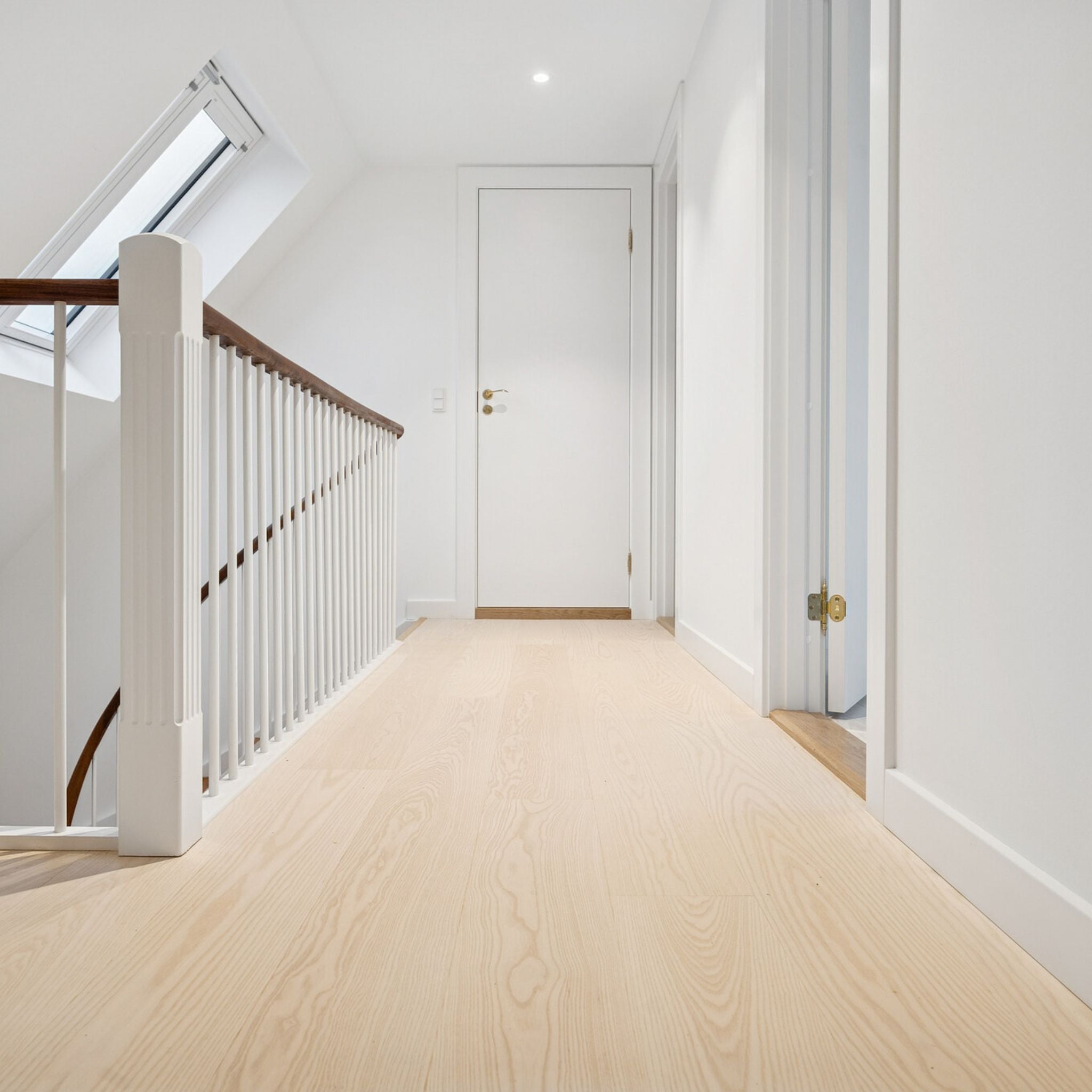
Your new Wiking Gulv is an engineered plank floor, which is installed either with our patented Q-LOC system or as a tongue and groove solution. The floors are for floating installation without the use of glue on a subfloor of concrete, particle board or plywood.
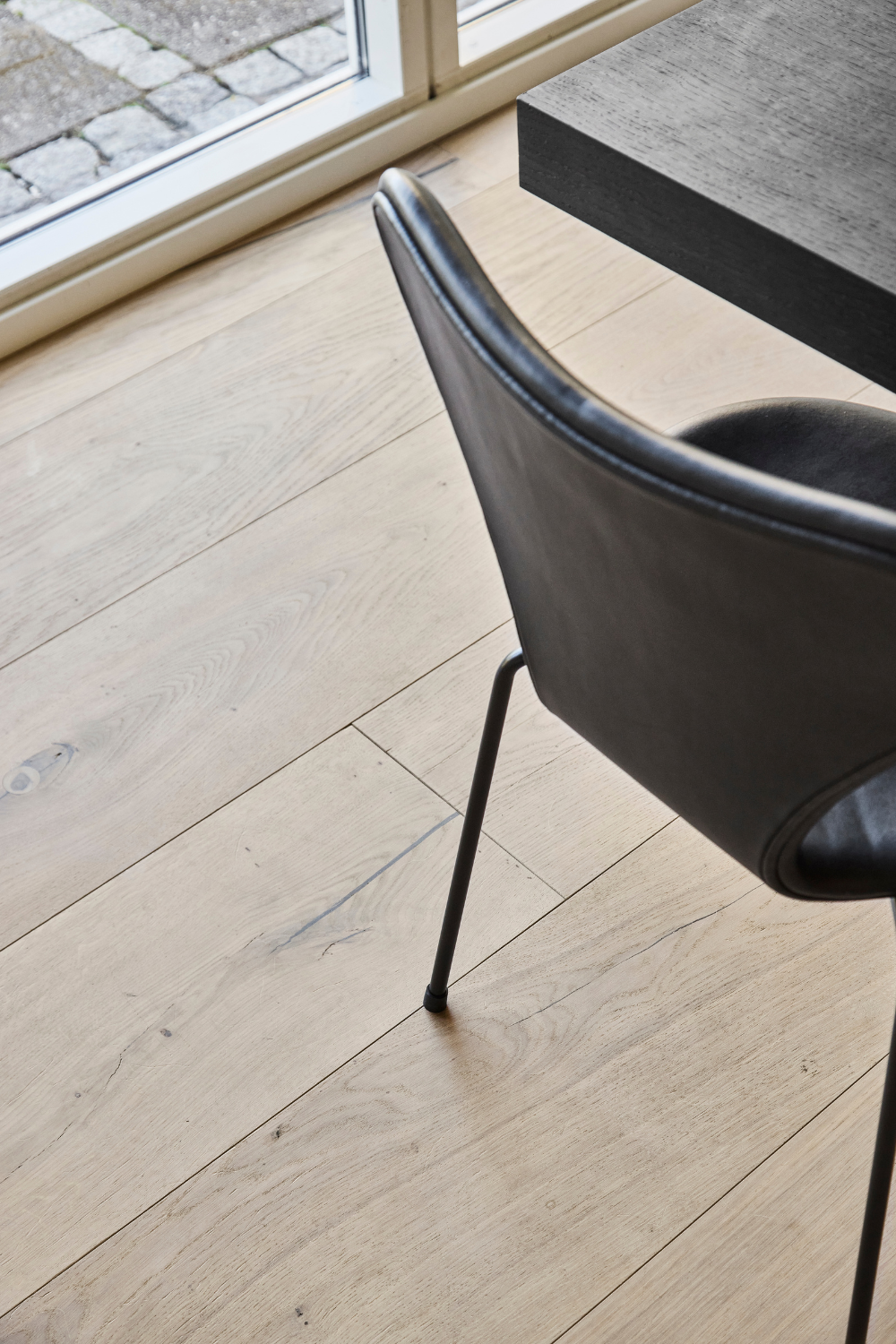

care for your floor
After mounting
A Wiking Floor is made to withstand the rigours of home life. We take great pride in ensuring that our floors benefit everyone in the room – children, family, pets, and friends alike.
It's quite simple to maintain the unique appearance of your Wiking Floor for many years; it just requires correct cleaning and care. With proper maintenance, the floor will remain beautiful, durable, and dirt-repellent.
Find the right care for your specific floor among the possible surface treatments shown below.
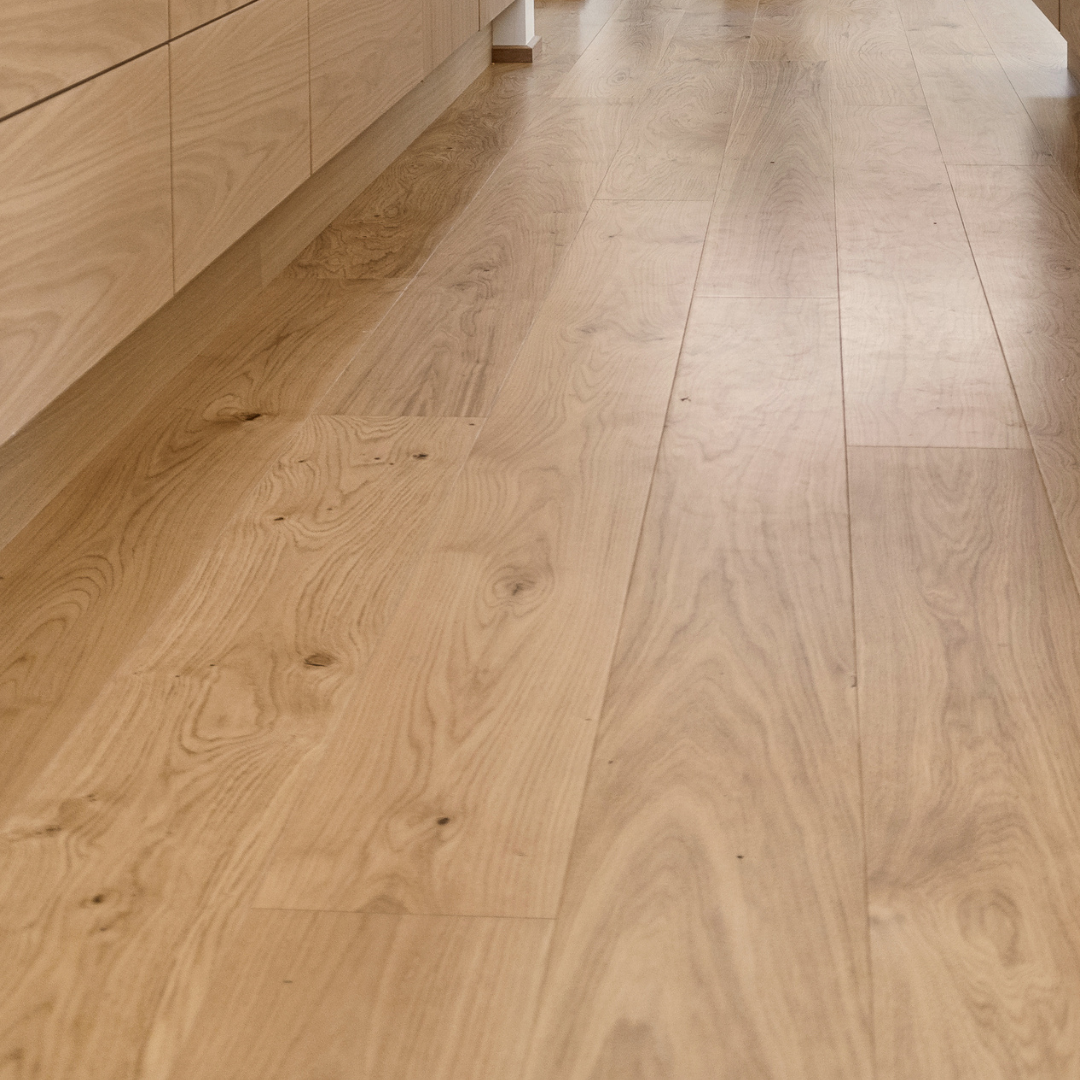
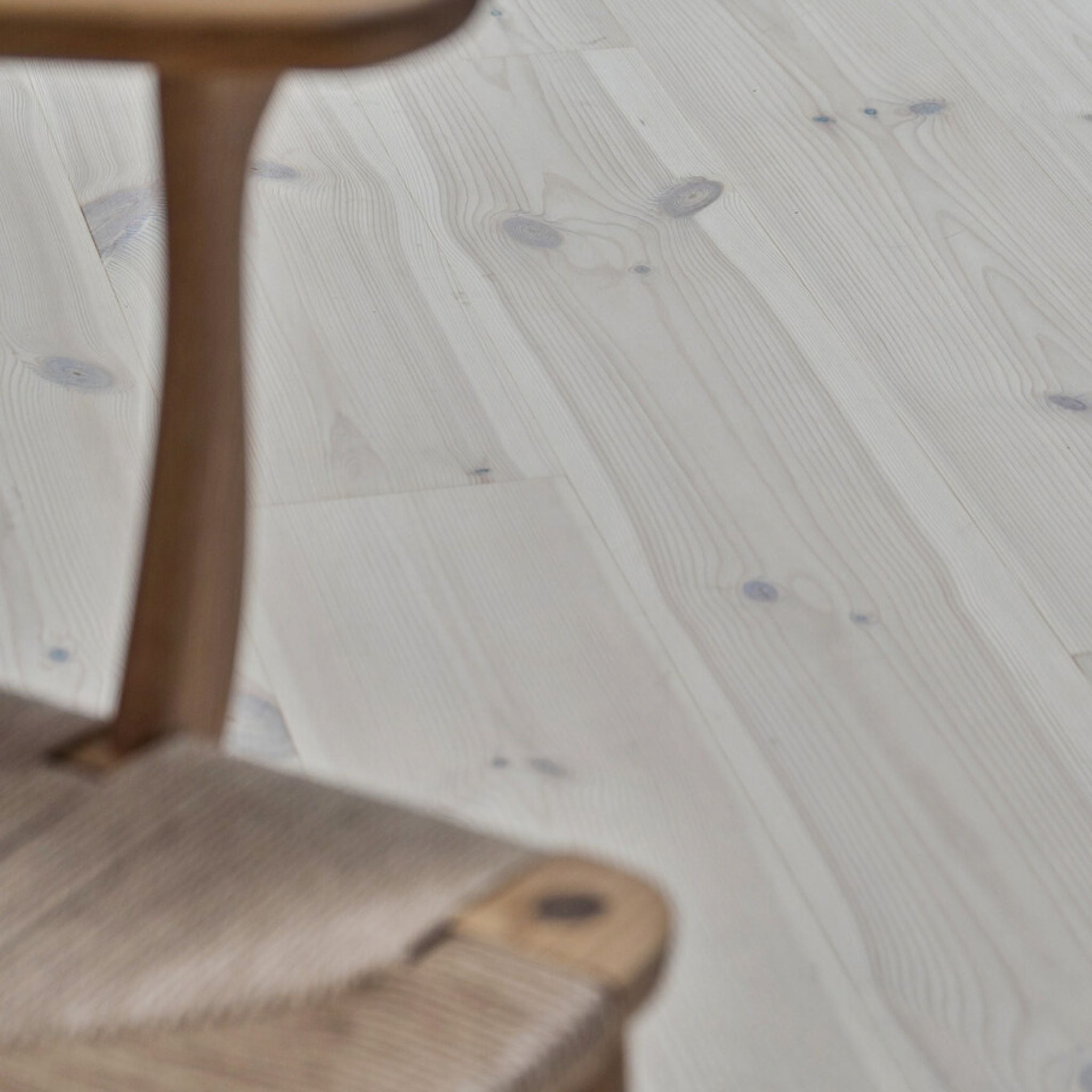
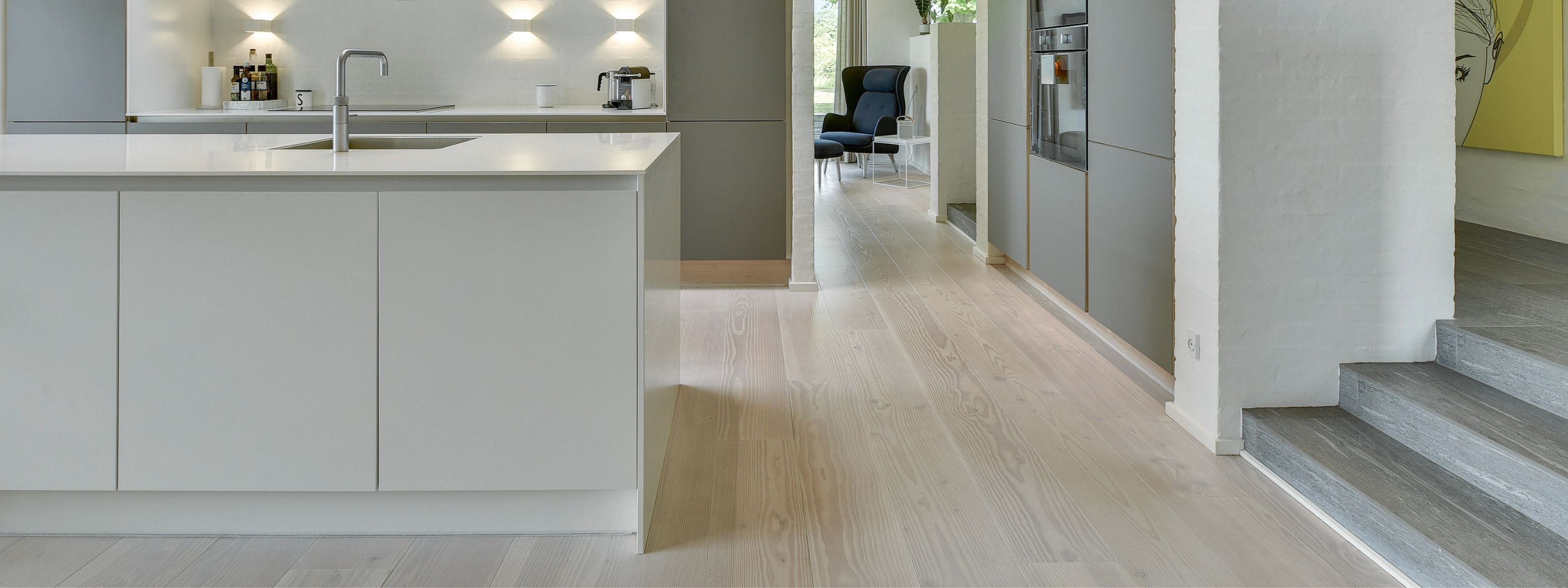
Various mounting methods
Q-LOC click system or Tongue and Groove?
When choosing between a Q-LOC click system and tongue and groove for installing a wooden floor, there are several differences, advantages, and disadvantages to consider.
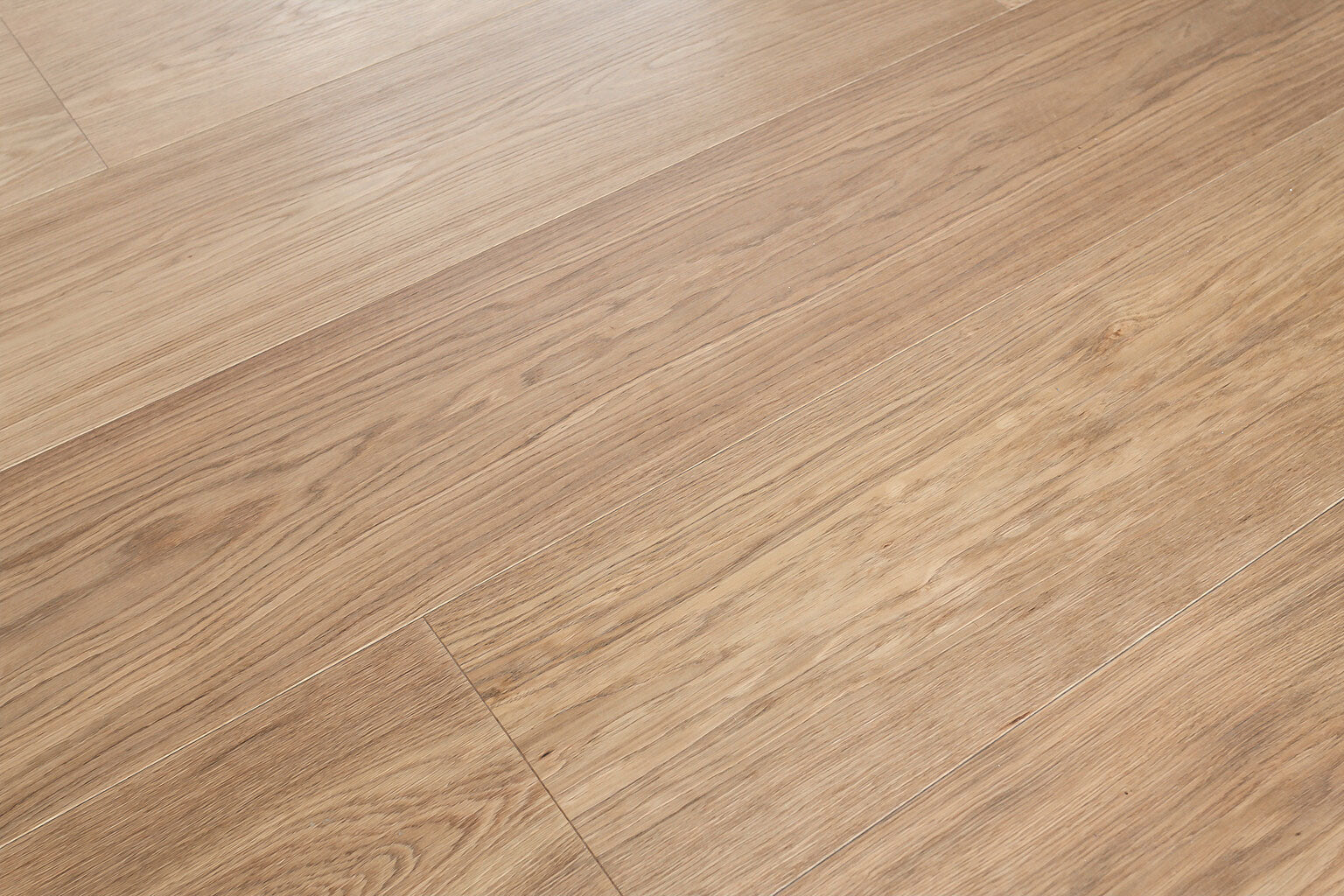
Q-LOC CLICK SYSTEM
Wiking Gulve uses Q-LOC for all 15 mm thick wooden floors.
This is a modern click solution where the floorboards are locked together without the use of glue or screws.
Advantages:
- Easy and quick installation – Laid as a floating floor without glue or screws. Perfect for DIY projects
- Can be disassembled – Easy to remove again, for example when moving or replacing individual boards
- Good stability – Q-LOC systems are designed to reduce movement and create tight joints
- Can be laid by 1 person
- Good for renovation projects where there is often not much space for very thick floors due to existing structures
- Can be laid floating or fully glued to the subfloor
Disadvantages:
- Requires a load-bearing subfloor and cannot be installed on battens
- Since it is not glued, there may be tension sounds from the lock due to temperature and humidity changes
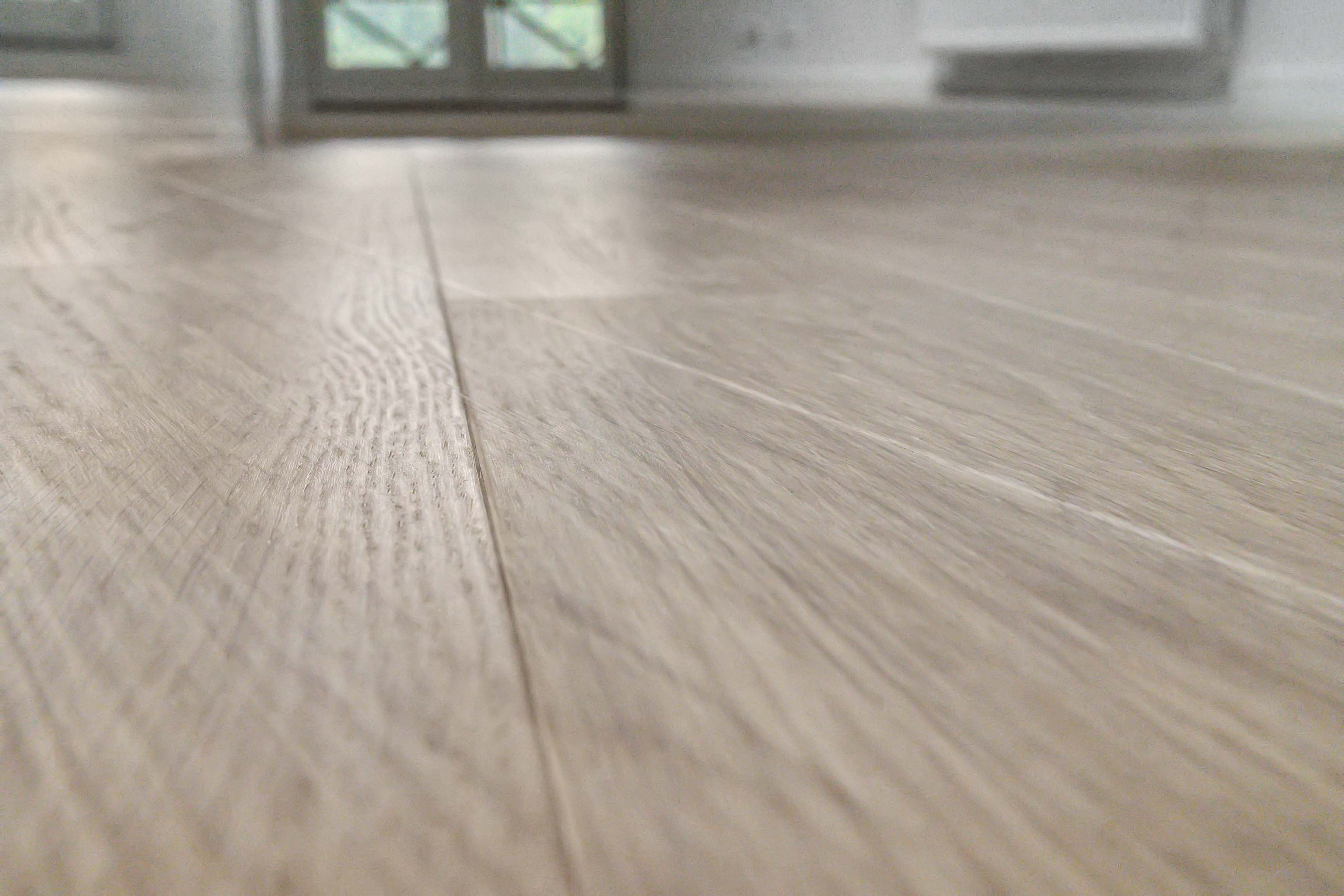
YES/NO:
Wiking Gulve uses tongue and groove on all wooden floors with a thickness of 22 mm.
You can install your new wooden floor yourself using the simple tongue and groove method, but there are many things you need to be aware of.
Advantages:
- Extra strong joint – Fixed installation with glue or screws makes the floor more stable
- Better for larger areas – Suitable for floors that need to withstand heavy traffic or heavy furniture
- Less movement – Reduces the risk of creaking noises and joint displacement
- Installation on concrete
- Installation on joists
- Full gluing
Disadvantages:
- More time-consuming installation – Often requires professional installation and a minimum of 2 people
- Difficult to remove – Must be destroyed when replaced
FAQ
Experience Danish quality at home
In addition to discussing your needs, we also offer to send samples to your home, so you can calmly and comfortably choose the wooden floor that suits you and your home. If you're laying many square meters of flooring, a consultant will even accompany the samples.
Yes, our floors are produced by local employees at our own sawmill, near Skive. Read more about our history right here.
Yes, you always have the option to view our floors before ordering. You can have a sample sent directly to your home or view our floors in one of our showrooms.
Yes, all our floors are easy to maintain in a busy everyday life. We recommend reading our care guides
– they can be read right here

Danish-produced wooden floors

FSC, PEFC and Cradle to Cradle certified

We only use wood from 100% sustainable forests

Order a wood sample or flooring consultant

Easy assembly with Q-LOC click system & tongue/groove

Tel.: +45 97 52 56 00
Email: wiking@wikinggulve.dk
Wiking Gulve A/S
Hesthøjvej 16
DK- 7870 Roslev
CVR No.: 3232 3995
Phone hours
Monday 8.00 AM – 4.00 PM
Tuesday 8.00 AM – 4.00 PM
Wednesday 8.00 AM – 4.00 PM
Thursday 8.00 AM – 4.00 PM
Friday 8.00 AM – 3.00 PM
Showroom
Professional
Warranty Terms